Toilet paper: a simple story behind an essential product
Although we take it for granted today, toilet paper is one of the most important products in our daily lives. Its history dates back to antiquity, when various cultures used natural materials such as leaves, sponges, and fabrics. However, toilet paper as we know it was invented in China in the 6th century, although its domestic and commercial use became widespread much later.
In 1857, the American Joseph Gayetty first marketed a medicated paper for sanitary use. It wasn’t until the beginning of the 20th century that its production in rolls became widespread, becoming the modern standard. Since then, its manufacturing has evolved to be more efficient, hygienic, and environmentally friendly.
Toilet Paper Manufacturing Process The main stages of the industrial toilet paper production process are described below:
Selection of raw materials
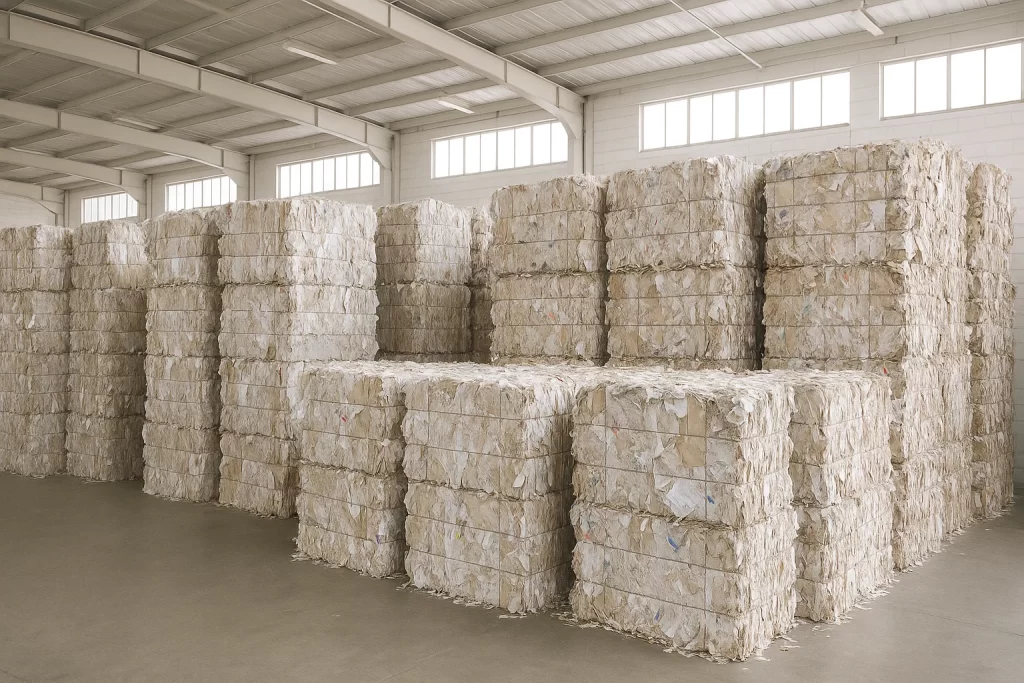
Virgin fibers (from wood) or recycled fibers (recovered paper) are used.
In some cases, virgin cellulose is mixed with recycled material to improve the quality of the paper.
Obtaining the pulp
Recycled wood or paper is subjected to mechanical or chemical processes to separate the cellulose fibers.
The result is a soft paste called pulp, which is diluted with water.
Bleaching (optional)
If white toilet paper is desired, bleaching agents such as hydrogen peroxide or oxygen are applied (avoiding the use of chlorine as much as possible).
This step can also be omitted to produce natural paper, such as recycled or kraft-colored paper.
Leaf formation
The diluted pulp is poured onto a moving mesh in a paper machine, where the water is drained and the fibers are intertwined.
Very thin layers of paper are formed, which then pass through rollers that dry them with hot steam.
Rolled and pressed
Dry paper is wound onto large rolls called “jumbo rolls”.
If the paper will be multi-layered (double sheet, triple sheet), they are laminated and glued together.
Cutting and die-cutting
The coils are unwound and cut to the desired length.
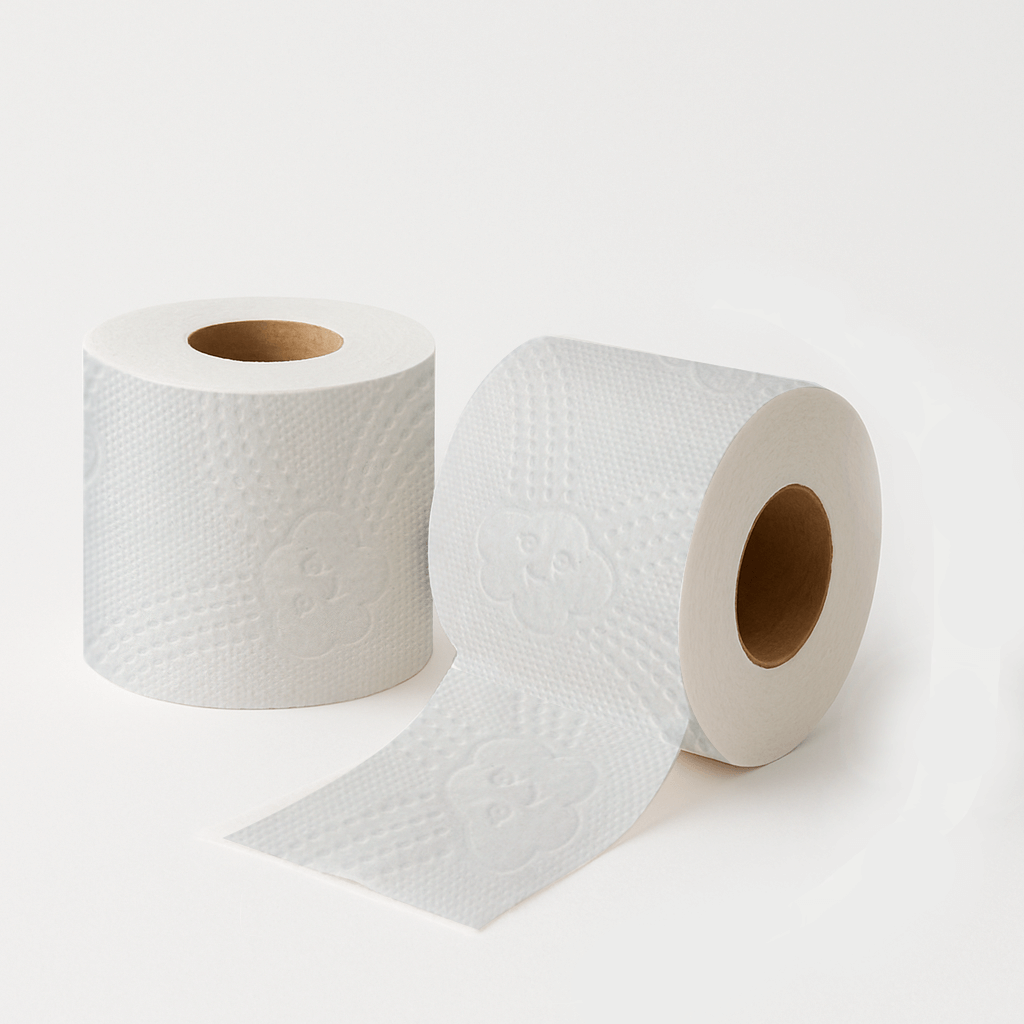
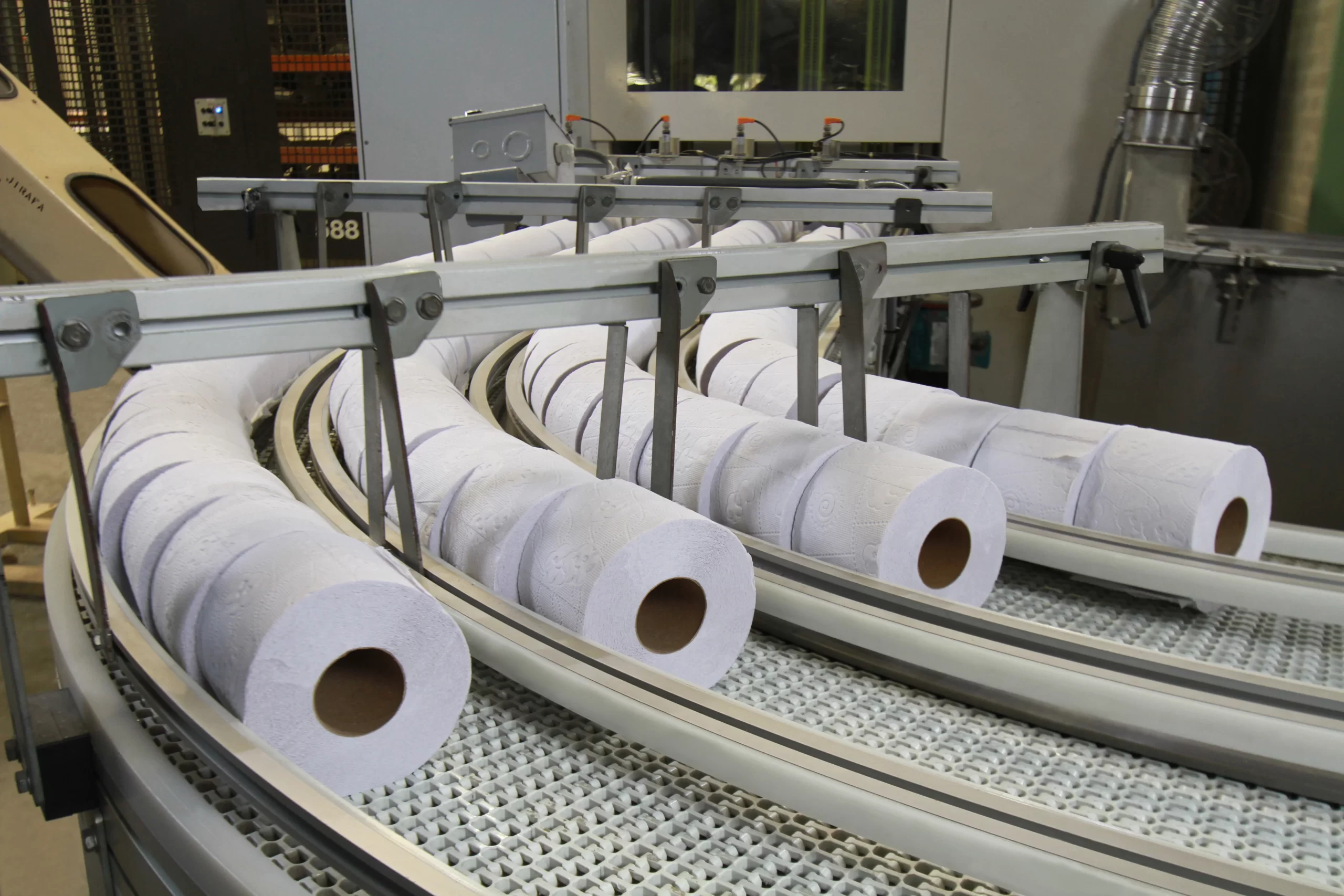
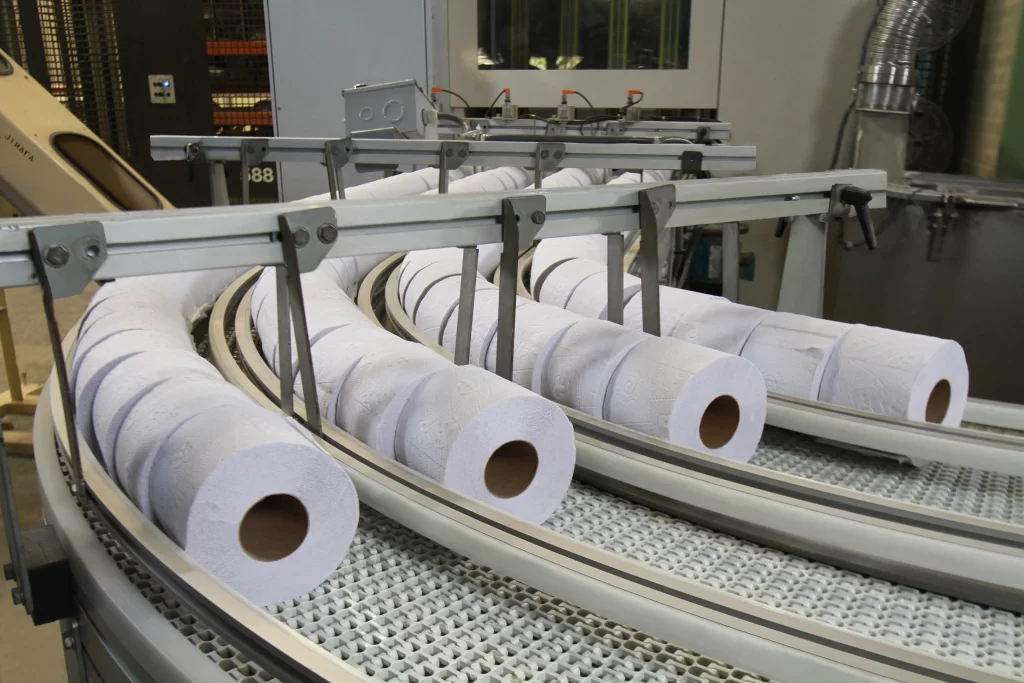
The separation lines between sheets are die-cut and the final roll is formed.
Empaque
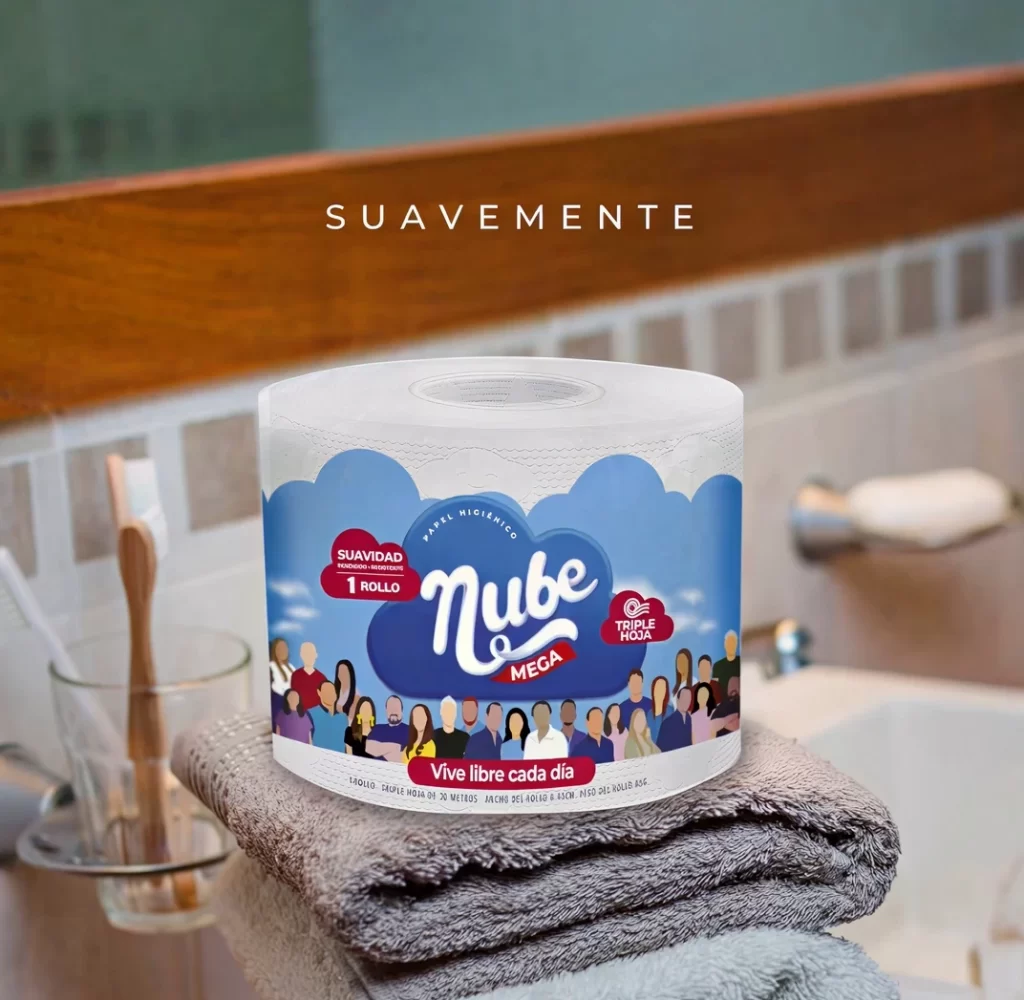
The rolls are packaged in individual presentations or in multi-packs.
Quality controls are applied to texture, softness, resistance and length.
In conclusion, toilet paper is the result of a highly specialized industrial process that combines technology, sustainability, and quality control. Understanding its manufacture allows us to better appreciate this essential product, whose history and evolution reflect advancements in hygiene, efficiency, and environmental responsibility.